
East Brunswick DUI Attorney
Experienced DWI and DUI Defense Attorneys in East Brunswick, NJ
East Brunswick is one of Middlesex County’s major commercial and residential communities, with busy highways, extensive shopping districts and local roads connecting the township with New Brunswick, Milltown, South River and Old Bridge. Route 18 runs through the heart of its commercial district, while Cranbury Road, Ryders Lane and other important roads carry motorists between residential neighborhoods, businesses and neighboring municipalities.
 These different traffic environments can produce very different DWI investigations. Some arrests begin with an alleged moving violation on Route 18. Others arise from accidents at busy intersections, traffic stops along residential streets or encounters with drivers who have left nearby restaurants and entertainment establishments.
William Proetta Criminal Law represents individuals charged with driving while intoxicated, drug-related DWI and breath-test refusal in East Brunswick Municipal Court. Our attorneys examine the entire investigation, including the initial police encounter, the officer’s observations, roadside testing, video evidence and any chemical-testing results.
Founding attorney William A. Proetta is a certified Standardized Field Sobriety Testing instructor and has specialized training involving New Jersey’s Alcotest breath-testing equipment. That training helps our firm evaluate the procedures officers followed and identify issues that may affect the prosecution’s evidence.
We also represent individuals charged with DWI throughout the surrounding area. Visit our Middlesex County DWI defense page for countywide information or our New Jersey DWI lawyer and defense guide for a broader discussion of statewide laws, penalties and defenses.
Official DWI Statistics for East Brunswick
Official New Jersey Judiciary statistics
DWI Case Filings in East Brunswick
Year-over-year change: +4 (+2%).
These figures are DWI case filings reported for East Brunswick Municipal Court. They are not a count of police arrests, convictions or stops on any particular road.
Source: New Jersey Judiciary Municipal Court Statistics, June 2026.
Understanding East Brunswick’s DWI Caseload
According to the New Jersey Judiciary’s municipal court statistics, East Brunswick Municipal Court recorded 246 DWI filings during the July 2025–June 2026 court year, compared with 242 during the preceding year.
The figures demonstrate a substantial and relatively consistent volume of DWI cases before the municipal court. They also provide useful context for the different types of investigations that can arise in a community with major highways, commercial developments and extensive residential neighborhoods. These figures measure municipal court filings rather than individual arrests, convictions or police stops. They do not identify which roads produced the most DWI charges or which law enforcement agencies initiated the investigations.
A Route 18 DWI prosecution can present different evidentiary issues from a case originating on a neighborhood street or following a collision. For that reason, our attorneys examine each client’s actual circumstances rather than relying on general enforcement statistics. East Brunswick’s roadway network is an important part of understanding the circumstances surrounding a local DWI arrest. Route 18 serves the township’s principal commercial corridor. Cranbury Road, Ryders Lane and New Brunswick Road connect shopping destinations, residential neighborhoods and surrounding municipalities. Each road has its own traffic patterns, intersection layouts and potential conditions affecting a motor vehicle stop.
Major Highways and Roadways in East Brunswick for DWI Stops
Local driving routes and traffic areas; not a ranking of DWI arrest locations.
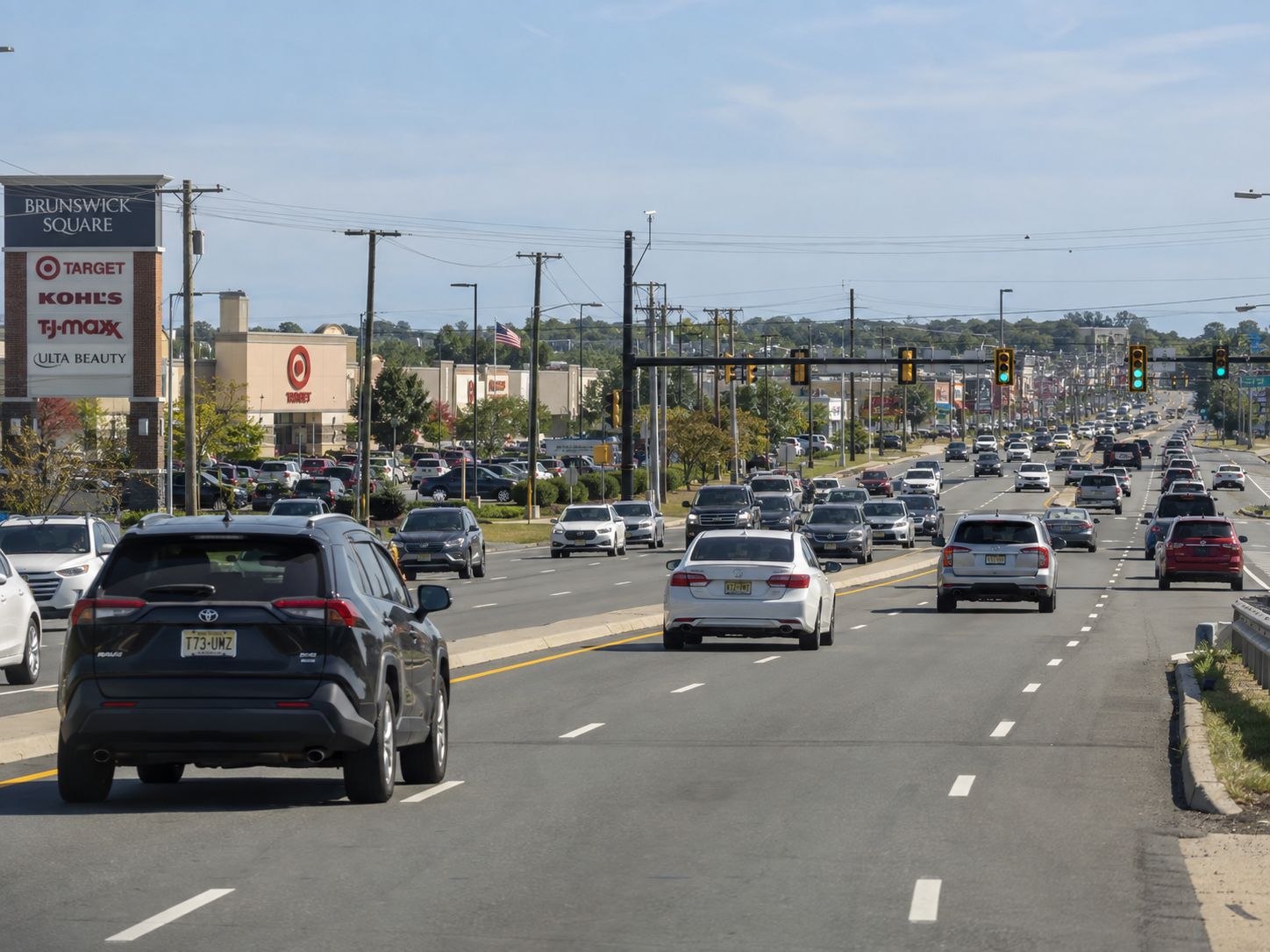
Route 18
Route 18 is East Brunswick's major commercial corridor, serving shopping centers, restaurants, office properties and connections to neighboring New Brunswick. Multiple lanes, signalized intersections, business entrances and turning movements create a more complex setting than the township's residential streets. An officer's observations of weaving or an allegedly unsafe maneuver should be considered alongside the traffic and roadway conditions at the exact location of the stop.
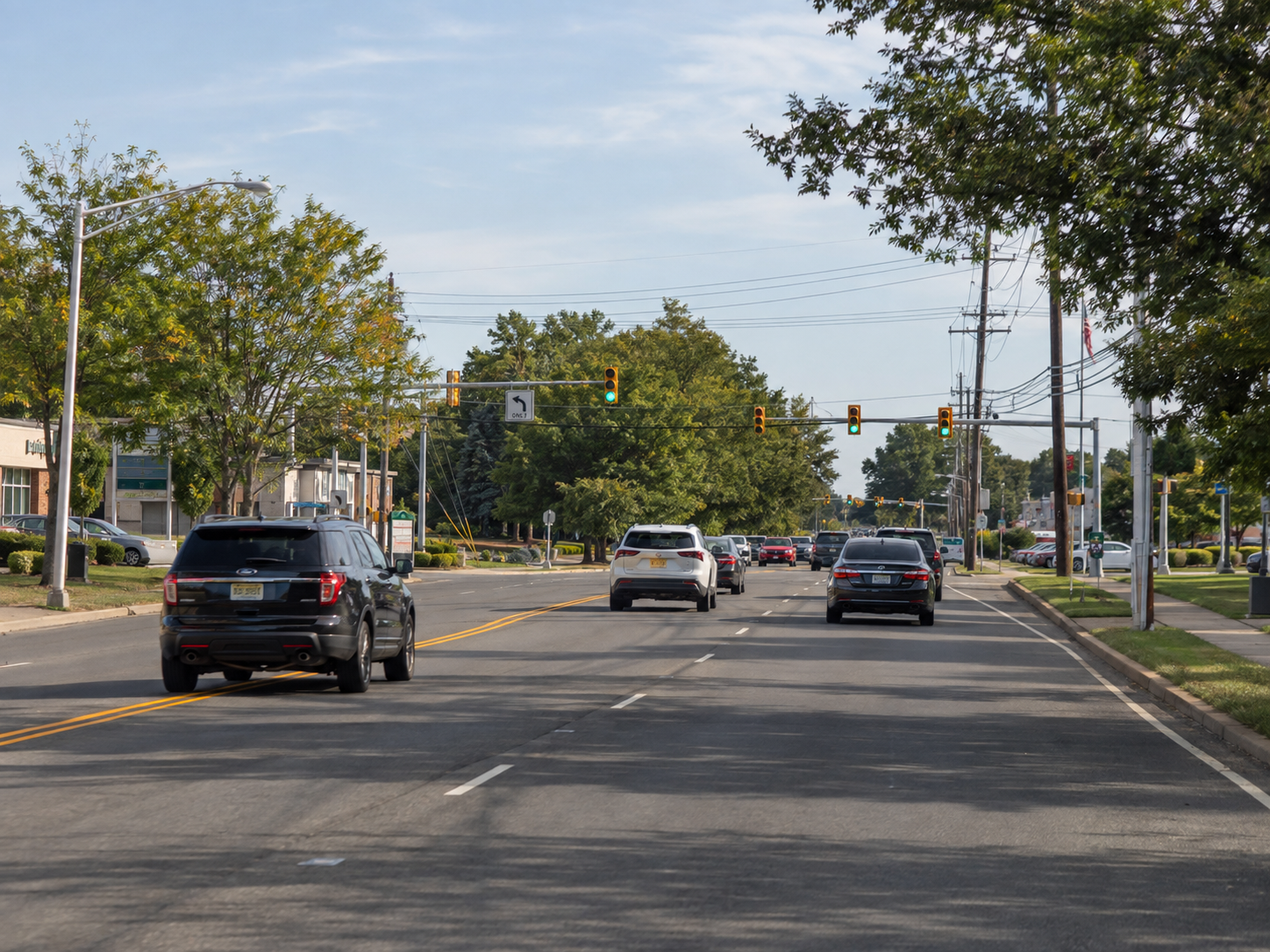
Cranbury Road
Cranbury Road connects East Brunswick's residential neighborhoods and community destinations with Route 18 and roads leading toward Cranbury. School, local-shopping and commuter traffic can affect the corridor at different times of day. For a DWI investigation, questions may include what initially prompted the stop, whether video captures the maneuver in question and where any roadside tests were conducted.
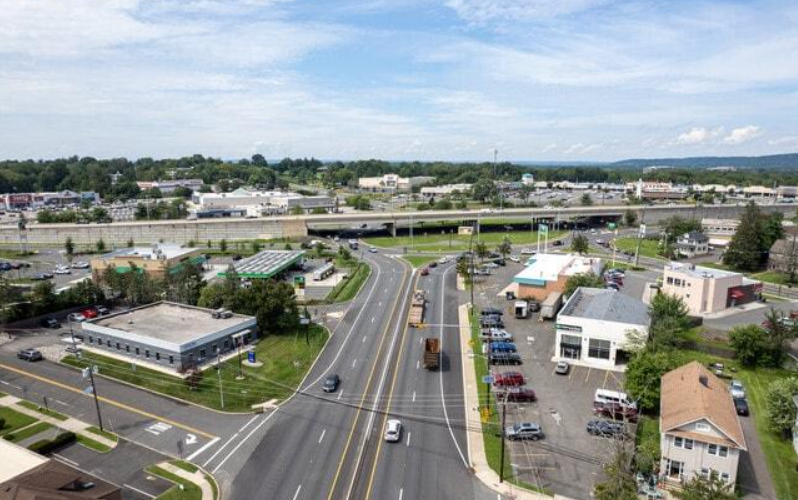
Ryders Lane
Ryders Lane provides a heavily used connection through East Brunswick toward Milltown and neighboring residential and commercial districts. Drivers encounter traffic signals, local intersections and vehicles turning between neighborhood streets and regional routes. Those details can matter when assessing an alleged traffic violation or whether a location selected for field sobriety testing was level, adequately illuminated and reasonably safe.
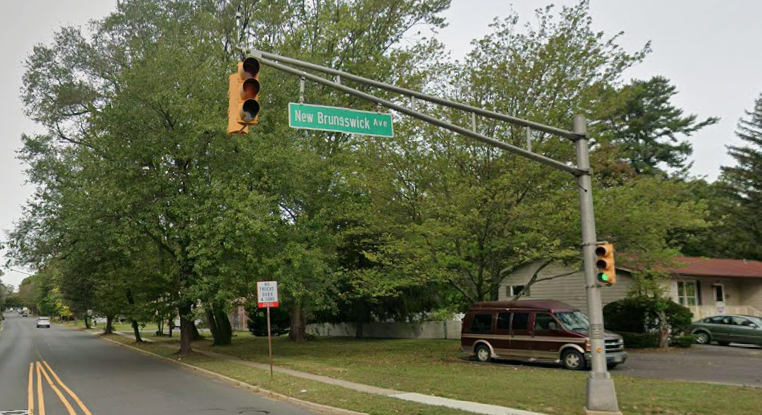
New Brunswick Road
New Brunswick Road serves as a local connection between East Brunswick and the roads approaching New Brunswick, with residential development and intersecting neighborhood streets along the way. Traffic conditions can differ substantially from those on nearby Route 18. When an arrest begins with a claimed lane or turning violation, the location, road markings and available recordings should be reviewed rather than relying on a generic description of the roadway.
Defending DWI Arrests Along East Brunswick’s Route 18 Corridor
Route 18 deserves particular attention because it combines substantial commuter traffic with major shopping centers, restaurants, office buildings and frequent entrances to commercial properties.
Unlike a relatively quiet residential street, Route 18 presents drivers with multiple travel lanes, signalized intersections, turning movements and vehicles entering or leaving businesses throughout the day.
When police allege that a driver committed a traffic violation along this corridor, identifying the exact location is an important part of evaluating the case.
Alleged Lane Violations and Unsafe Driving
A Route 18 DWI investigation may begin with an officer reporting that a vehicle crossed a lane marking, made an unsafe turn, drifted between lanes or committed another moving violation.
Our attorneys examine the specific roadway segment, the applicable traffic controls and any available dashboard-camera recordings to determine whether the evidence supports the officer’s observations.
A vehicle moving between lanes near a commercial entrance, for example, should be evaluated in the context of the roadway configuration and surrounding traffic. The police report may describe the maneuver, but video evidence and the actual layout can help establish precisely what occurred.
The legality of the initial stop is a separate question from whether police subsequently developed probable cause for a DWI arrest. Both issues should be evaluated independently.
For more information, see our guide to challenging a DWI traffic stop in New Jersey.
Roadside Sobriety Testing Along a Busy Highway
The location selected for field sobriety testing may become an important issue in a Route 18 case.
A driver may be asked to perform roadside exercises near passing traffic, on a sloped surface or in an area illuminated by police emergency lights. These conditions do not automatically invalidate the tests, but they may affect balance, concentration and the reliability of the officer’s conclusions.
Our attorneys examine the precise testing location, the instructions provided, the driver’s recorded performance and any environmental or physical circumstances that may have affected the results.
William Proetta’s training as a Standardized Field Sobriety Testing instructor provides a foundation for examining whether the officer properly administered and evaluated the roadside exercises.
Read more about challenging field sobriety tests in New Jersey.
DWI Investigations Following Motor Vehicle Accidents in East Brunswick
Not every DWI prosecution begins with an officer observing a moving vehicle.
East Brunswick’s busy commercial roads and intersections mean that some investigations arise after police respond to a motor vehicle accident. The responding officer may arrive after the collision and rely on statements, physical evidence or observations made at the scene.
These cases can present questions that do not ordinarily arise in a routine traffic stop.
Establishing Who Was Driving
If an officer did not personally observe the defendant operating the vehicle, the prosecution may rely on witness statements, the driver’s admissions or circumstantial evidence.
Our attorneys examine who actually witnessed the incident, what each witness reported and whether the physical evidence supports the account presented by the prosecution.
In cases involving multiple vehicle occupants or uncertainty about who operated the vehicle, the underlying evidence deserves particularly careful review.
Evaluating the Timing of Alleged Impairment
An accident investigation can also raise questions concerning when the relevant observations occurred.
An officer’s observations after a collision should be considered in the context of the complete sequence of events. The defense may need to examine the reported accident time, when police arrived, any intervening events and the timing of subsequent chemical testing.
The prosecution must establish the required elements of the charged offense through admissible evidence. An officer’s arrival at an accident scene does not, by itself, establish every element of DWI.
Obtaining Accident-Related Evidence
Depending on the circumstances, important materials may include accident reports, photographs, recordings from responding officers, witness statements, emergency dispatch information and available footage from nearby businesses.
Our firm examines those materials alongside the DWI investigation to identify discrepancies, clarify the chronology and determine whether additional evidence should be preserved or obtained.
Police Departments Involved in East Brunswick DWI Investigations
East Brunswick by the Numbers
Population, police staffing and municipal court DWI filings in context.
The East Brunswick Police Department is the township’s municipal law enforcement agency and investigates traffic violations, accidents and suspected impaired driving within its jurisdiction. New Jersey State Police may also be involved in investigations arising on the New Jersey Turnpike or through assistance to another agency, depending on the actual location and circumstances.
Identifying the arresting agency is important because different departments may maintain separate reports, video recordings, dispatch information and breath-testing documentation.
East Brunswick Police Department
The East Brunswick Police Department is located at 1 Civic Center Drive in East Brunswick and has approximately 92 sworn police officers. East Brunswick Police DWI investigations usually begin with a traffic stop, a reported accident, information supplied by another motorist or an encounter involving a stationary vehicle.
When examining these cases, our attorneys distinguish between the officer’s observations before the stop, what occurred during the roadside investigation and the evidence subsequently collected following an arrest.
If multiple officers participated, we review their individual roles and determine whether additional reports or recordings are available. The observations recorded by the first officer should not automatically be attributed to officers who arrived later.
New Jersey State Police
The section of New Jersey Turnpike that passes through East Brunswick is patrolled by the New Jersey State Police. Specifically, State Police Troop D, which operates out of the Cranbury Station (located nearby in Cranbury, NJ) is responsible for patrolling the state highways running through or near East Brunswick. A State Trooper highway DWI investigation will most likely involve evidence collected at more than one location since defendants are taken to barracks located in another county.
As mentioned above, the initial stop, roadside investigation, transport and chemical testing may occur at different places. The defense should establish which officer conducted each stage and determine which agency possesses the relevant recordings and records.
The specific investigating agency does not change the elements the State must prove, but it can affect the evidence that must be obtained and examined.
East Brunswick Municipal Court Information
 DWI and breath-test refusal charges arising within East Brunswick are generally heard in East Brunswick Municipal Court, located at 1 Jean Walling Civic Center Drive.
The court handles municipal traffic matters, including DWI prosecutions. A defendant’s summons and subsequent court notices establish the required appearance date, location and instructions for attending court.
East Brunswick Municipal Court
📍 1 Jean Walling Civic Center Drive, East Brunswick, NJ 08816
DWI charges arising in East Brunswick are generally heard in East Brunswick Municipal Court. Your summons or court notice controls your appearance date, time, location and whether you must appear in person or virtually.
Parking, Court Hours & What to Expect →Get Directions to East Brunswick Municipal Court
What Happens After an East Brunswick DWI Arrest?
After an arrest, the defense ordinarily obtains and reviews discovery, including police reports, motor vehicle summonses, recordings and any applicable chemical-testing documentation.
That review helps determine whether additional evidence should be requested, whether expert analysis may be appropriate and whether the case presents grounds for pretrial motions.
Some cases may qualify for a negotiated disposition under New Jersey’s current DWI plea-agreement framework, subject to the applicable legal requirements and court approval. Others proceed to trial.
The appropriate strategy depends on the particular evidence, charges and circumstances of the case.
How We Prepare an East Brunswick DWI Defense
Our approach begins by reconstructing the investigation rather than relying exclusively on the arresting officer’s written conclusions.
The location of the police encounter, the duration of the driving observations, the circumstances of the roadside investigation and the chemical-testing procedures can all affect the evaluation of a case.
Examining Police Reports Against Video Evidence
A police report summarizes an officer’s recollection and conclusions, but available recordings may provide a more complete account of the encounter and could raise issues with the probable cause for the stop that be leveraged to dismiss the DWI charges.
Our attorneys compare the report with dashboard-camera and body-camera footage to examine the alleged driving behavior, the driver’s interactions with police and the manner in which roadside tests were administered.
We also review whether the recordings reveal relevant facts that were omitted from the written report, such as the driver’s ability to follow instructions or environmental conditions at the testing location.
Reviewing Alcotest Records and Procedures
When a DWI prosecution relies on a reported blood alcohol concentration, we examine the testing process that produced the result.
That review may include the particular Alcotest model, operator qualifications, calibration documentation, required observation procedures and available recordings from the testing location.
A reported BAC does not eliminate the State’s obligation to establish the required foundation for admitting breath-test evidence. Any discrepancy must be evaluated in the context of the particular instrument, operator and testing circumstances.
For a detailed discussion of the legal and scientific issues, see our guide to challenging breath-test evidence in New Jersey.
Examining Drug-Related DWI Allegations
Some East Brunswick cases involve suspected impairment from drugs or medication rather than alcohol.
These investigations may involve officer observations, roadside exercises, Drug Recognition Expert evaluations and toxicology evidence. The significance of a particular test result depends on the substance involved, the timing of collection and the other evidence of impairment.
Our attorneys examine how the investigating officers reached their conclusions and challenge the drug impairment evidence.
Evaluating Parked-Vehicle Investigations
A DWI investigation involving a driver found in a parked or stationary vehicle can present questions about operation or intent to operate.
Our firm examines the position and condition of the vehicle, the driver’s location and actions, any witness observations and the circumstances of the police encounter.
These details can become particularly important when officers did not observe the vehicle moving.
Why Our East Brunswick DWI Defense Experience Matters
The defense of a DWI case requires more than reviewing the reported breath-test number or the officer’s description of a failed sobriety test.
East Brunswick cases can involve complicated highway traffic conditions, investigations following accidents, multiple responding officers and testing performed away from the initial stop.
Our attorneys examine how those circumstances affect the evidence in the individual case.
William Proetta’s specialized field sobriety and Alcotest training is particularly relevant when analyzing whether officers followed standardized procedures and whether the State can establish the foundation for its chemical-testing evidence.
We also recognize the importance of local preparation. A Route 18 case involving an alleged lane violation requires attention to the roadway and traffic conditions at the exact location of the stop. An accident case may require a detailed chronology and review of witness observations. A breath-test case requires examination of the specific instrument and supporting records.
The objective is to identify the issues supported by the evidence and prepare an appropriate defense for the charges actually filed.
Frequently Asked Questions About East Brunswick DWI Cases
How many DWI cases are filed in East Brunswick?
East Brunswick Municipal Court reported 246 DWI filings for the July 2025–June 2026 court year, compared with 242 during the preceding court year. These are court filings, not a count of arrests or convictions.
Does the location of my Route 18 traffic stop matter?
Yes. The precise location may affect the evaluation of an alleged moving violation, the availability of video evidence, the arresting agency and the conditions under which field sobriety tests were administered.
What if the police arrested me after an accident?
An accident investigation may involve issues concerning who operated the vehicle, the timing of relevant observations, witness statements and evidence gathered after officers arrived. These issues depend on the circumstances and should be evaluated alongside the complete police investigation.
Can an Alcotest result be challenged?
Potentially. The defense can examine whether the instrument and testing procedures complied with applicable legal and scientific requirements, including the required observation procedures and supporting documentation. A successful challenge depends on the facts and evidence of the particular case.
Where will my East Brunswick DWI case be heard?
DWI cases originating within East Brunswick are generally handled by East Brunswick Municipal Court at 1 Jean Walling Civic Center Drive. Follow the appearance instructions supplied by the court.
Speak With an East Brunswick DWI Defense Attorney
If you have been charged with DWI, drug-impaired driving or breath-test refusal in East Brunswick, the circumstances of your arrest deserve careful examination.
William Proetta Criminal Law represents clients facing DWI charges in East Brunswick Municipal Court and throughout Middlesex County. We review police procedures, roadway conditions, officer recordings and chemical-testing evidence to identify potential defenses and prepare cases for the appropriate proceedings.
Call our Edison office at 732-659-9600 for a free consultation about your East Brunswick DWI case.