
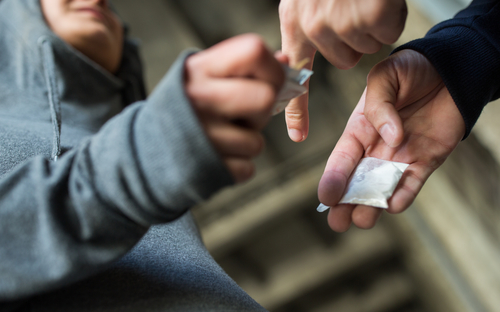
Cocaine Distribution Lawyer in Jersey City & Hudson County
Reviewed by William A. Proetta, Esq. · Updated
Selling cocaine, or holding it with a plan to sell, is charged under N.J.S.A. 2C:35-5, and New Jersey grades it strictly by weight. Under half an ounce is third degree. From half an ounce to under five ounces is second degree. Five ounces or more is first degree, punishable by 10 to 20 years and a fine of up to $500,000. Crack and powder are graded identically, and the scale counts any cut mixed into the product. Cocaine sale cases from Jersey City, Hoboken and every other Hudson County town are heard in the Hudson County Superior Court at the Frank J. Guarini Justice Complex near Journal Square. William Proetta Criminal Law defends clients facing cocaine sale and intent charges from our Jersey City office, with over 15 years of criminal trial experience. Call (201) 793-8018, 24/7. Se habla español.
Cocaine Sale and Intent Charges
| Charge | Statute | Usual grade | Where it is heard |
|---|---|---|---|
| Cocaine or crack under half an ounce | 2C:35-5(b)(3) | 3rd degree | Superior Court |
| Cocaine or crack, half an ounce to below 5 oz | 2C:35-5(b)(2) | 2nd degree | Superior Court |
| Cocaine or crack, 5 oz and over | 2C:35-5(b)(1) | 1st degree | Superior Court |
| Cocaine sale near a school (1,000 ft) | 2C:35-7 | 3rd degree | Superior Court |
| Cocaine sale near a park or housing site (500 ft) | 2C:35-7.1 | 2nd degree | Superior Court |
| Cocaine possession for personal use | 2C:35-10(a)(1) | 3rd degree | Superior Court |
Two Kinds of Cocaine Cases
Cocaine distribution prosecutions tend to fall into two groups. In the first, there is a sale: an undercover officer or a confidential informant makes a controlled buy, sometimes more than once. Those cases turn on identification, on whether the informant was searched before and after the buy, on how the cocaine was handled afterward, and on the credibility of the people involved.
In the second group, nobody saw a sale. Officers find cocaine during a car stop, a frisk or a search warrant, and the prosecutor charges intent to distribute based on how it was packaged. Small knotted bags, a digital scale with residue, a stack of small bills or texts using slang for amounts are the usual building blocks. Those cases are often won or lost on whether that evidence actually points to dealing, or is just as consistent with a person who uses cocaine and buys in bulk.
Penalties for Cocaine Distribution
- Under half an ounce (third degree): three to five years, a fine up to $75,000 and a $1,000 Drug Enforcement and Demand Reduction penalty. A first offender has a presumption against prison.
- Half an ounce to under five ounces (second degree): five to ten years with a presumption of imprisonment, a fine up to $150,000 and a $2,000 penalty.
- Five ounces or more (first degree): ten to twenty years, a fine up to $500,000, a $3,000 penalty, and a mandatory parole bar of one-third to one-half of the sentence, which the prosecutor may waive in a plea agreement under N.J.S.A. 2C:35-12.
Every level also brings a lab fee and possible driver’s license suspension. In a large cocaine case, the court can go beyond those caps: N.J.S.A. 2C:43-3(h) permits a fine of up to three times the street value of the cocaine involved. Because the State can aggregate separate sales, a series of small controlled buys can be charged as one higher-degree count, and a prior distribution record can open the door to an extended term on the prosecutor’s application.
Resolving a Cocaine Sale Charge Without a Distribution Conviction
When the case rests on packaging rather than an observed sale, an amendment to cocaine possession is a realistic target. Possession is still a third-degree crime, but it is graded without regard to quantity, it fits more comfortably within pretrial intervention, and it does not carry the trafficking label. Entering PTI on the sale charge itself is difficult, particularly for someone who is not dependent on cocaine, and a second-degree count requires the prosecutor’s consent. Someone who was selling to support their own cocaine habit may be a candidate for Recovery Court instead of a state prison term, and graduates may later be eligible to expunge the record.
Arrest and Pretrial Release
Cocaine sale arrests typically proceed on a complaint-warrant, especially after a controlled-buy investigation or when the weight reaches second degree. The prosecutor is more likely to move for detention if a weapon was recovered or you have a pending case. Release conditions, when granted, can include reporting to Pretrial Services and staying away from the area of the alleged sales. See our pretrial release and detention guide and our page on Central Judicial Processing in Hudson County.
Immigration Consequences
A cocaine distribution or intent conviction is generally classified as an illicit trafficking aggravated felony, and that classification removes most options an immigration judge would otherwise have. A conviction for possessing cocaine is still a deportable controlled-substance offense, but it generally does not carry the aggravated felony label, which can make a real difference. We review the immigration side before any plea; see our immigration consequences and immigration-safe plea strategy pages.
Defending a Cocaine Distribution Charge
- Informant buys. We look for gaps in the pre-buy and post-buy searches, recordings that do not show the transaction and informants with deals of their own.
- Personal use. Someone who uses cocaine regularly may carry more than a casual user. That alone does not prove dealing.
- Car stops. Many cocaine cases in Hudson County start with a traffic stop that was extended or searched without a valid basis.
- Lab and weight. The lab must confirm cocaine, and the reported weight of the mixture must exclude packaging. A few grams can change the degree.
- Aggregation. Whether separate buys may fairly be combined into one count is a legal question worth litigating.
Cocaine Distribution Charges in Jersey City, Hoboken and Hudson County
In Jersey City, cocaine sale arrests can follow, for example, narcotics surveillance and undercover buys, apartment search warrants, or traffic stops near the Holland Tunnel. Hoboken cases may involve sales connected to the bar scene along Washington Street, where an arrest can begin with a single small bag and a phone full of messages. Each of these cases is screened by the prosecutor and moves to Superior Court, and any count that is downgraded goes back to the town’s municipal court. See our Jersey City, Hoboken, Kearny, Union City and Bayonne drug charge pages.
Jersey City Cocaine Distribution FAQs
How much cocaine turns a sale charge into a first-degree crime?
Five ounces or more of the mixture, cut included. Half an ounce to under five ounces is second degree, and anything under half an ounce is third degree.
Is crack graded more harshly than powder cocaine in New Jersey?
No. New Jersey uses the same weight thresholds for crack and powder.
The police never saw me sell. Can they still charge distribution?
Yes, as possession with intent to distribute, usually based on packaging, a scale, cash or texts. That evidence is circumstantial, and it is often where the defense focuses.
Can a cocaine distribution charge be pled down to possession?
Frequently, when the intent evidence is thin. A possession outcome can make PTI or probation realistic and avoids the aggravated felony classification for immigration.
My cocaine arrest was in Hoboken. Which court handles it?
The Superior Court in Jersey City, with the Hudson County Prosecutor’s Office handling the case, not Hoboken Municipal Court.
Will a cocaine sale conviction lead to deportation?
It often does. Selling cocaine, or holding it with intent to sell, is generally treated as drug trafficking under federal immigration law, which bars most relief. Before any plea, the wording and the statute of conviction need to be reviewed with immigration consequences in mind.
Talk to a Jersey City Cocaine Distribution Lawyer
In a cocaine sale case, the lab weight, the legality of the search and the proof of intent decide most outcomes. Call our Jersey City office at (201) 793-8018 for a free, confidential case review, 24/7. Se habla español.